


The Transformative Power of Unsending Letters in Therapy

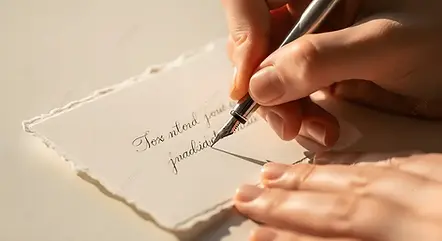
Over the years in practice, one of the most consistently effective techniques I return to is deceptively simple: writing a letter you never intend to send.
Clients are often surprised by how powerful this is. There is no confrontation, no “perfect wording,” no risk of escalation. Just structured expression. And yet, the psychological shift can be profound.
Unsent letters are a powerful journaling exercise for gaining clarity, closure, and release. The act of committing words to the page in an organized way can illuminate your path and free-up head space, even when the letter is intended for your eyes only.
I describe the impact in three clinical outcomes: catharsis, completion, and clarity.
1. Catharsis: Emotional Discharge Without Consequence
In therapy, we talk about affect regulation. Emotions that are unexpressed don’t disappear; they become internal pressure. They show up as rumination, irritability, sleep disturbance, or somatic tension.
Writing an unsent letter creates a contained release valve.
Because the letter is private, the writer bypasses impression management. There is no need to soften language, justify feelings, or anticipate rebuttal. The nervous system can discharge what it has been holding.
I have seen clients experience measurable relief after writing a single unfiltered paragraph. Not because the situation changed—but because the emotion finally moved.
The page can hold anger, grief, longing, gratitude, or ambivalence without pushing back.
2. Completion: Psychological Closure When Dialogue Isn’t Possible
Not every relationship offers resolution. Sometimes the other person is unavailable, unsafe, unwilling—or no longer alive.
Unsent letters allow clients to finish conversations that reality left incomplete.
In grief work, this can mean expressing love, regret, forgiveness, or unanswered questions. In relationship breakdowns, it may involve articulating what hurt, what was learned, and what boundaries will exist moving forward.
Importantly, closure is an internal process. It does not require mutual agreement.
When communication has become reactive or hostile, continuing direct contact can retraumatize rather than resolve. Writing privately allows emotional processing without reigniting conflict.
Instead of “digging it back up,” the client metabolises it.
That sense of completion often reduces intrusive thoughts and repetitive mental rehearsals.
3. Clarity: Organising the Emotional Narrative
Cognitive processing improves when experience is translated into language. Journaling forces structure onto what previously felt chaotic.
When clients write unsent letters, they frequently report:
Realising what is actually bothering them
Identifying unmet needs
Distinguishing fact from interpretation
Discovering values that were violated
Clarity reduces emotional fog. Confusion tends to amplify anxiety; articulation tends to regulate it.
Interestingly, not all unsent letters are about pain. Some are expressions of appreciation, admiration, or love that feels difficult to voice directly. Naming positive emotions can be equally grounding.

Why Handwriting Matters: The Added Psychological Benefit
While unsent letters can be typed, I consistently recommend handwriting whenever possible. From a therapeutic standpoint, the medium matters.
Handwriting engages the brain differently than typing. It is slower, more embodied, and more neurologically integrated. This pace creates space for emotional processing rather than emotional dumping.
Research in cognitive psychology and neuroscience suggests that handwriting:
Activates sensorimotor pathways linked to memory and emotion
Enhances emotional encoding and recall
Increases reflective processing rather than automatic responding
Because the hand moves more slowly than the mind, clients are more likely to notice what they are feeling as they write, not just what they think.
Embodiment and Nervous System Regulation
Handwriting is a physical act. The pressure of the pen, the rhythm of movement, and the tactile feedback anchor the body in the present moment.
For many clients—particularly those with trauma histories—this grounding effect supports nervous system regulation. Emotions emerge in a way that is tolerable rather than overwhelming.
Typing, by contrast, often mirrors the speed of rumination. Handwriting interrupts that loop.
Reduced Self-Censorship and Deeper Authenticity
Clients frequently report that handwritten letters feel more honest. The inability to instantly delete, revise, or perfect sentences reduces over-editing and impression management.
Once something is written by hand, it feels “real.” This can evoke vulnerability—but also depth.
That sense of permanence encourages emotional truth rather than performance.
Practical Ways I Recommend Using Unsent Letters
Below are structured variations I often suggest in sessions.
1. The “What I Really Want to Say” Letter
Useful before a difficult conversation. Prompt: “What I really want to tell you is…”Write until the core issue—not the surface complaint—reveals itself.
This reduces the likelihood of what I call “burnt chicken arguments” (fights that appear to be about one small issue but are actually about something deeper).
2. The Letter to Someone Who Has Died
Prompt: “I wish I could tell you…”This format supports grief integration and unfinished emotional business. Clients often experience a sense of relational continuity and relief.
3. The Future-Self Letter
Write to yourself five or ten years ahead. Explore:
What do I hope you’ve learned?
What do I want you to remember?
What must you not forget about who you are right now?
This strengthens long-term identity coherence and value alignment.
4. The Amends or Gratitude Letter
Whether in recovery contexts or personal growth, writing appreciation or acknowledgement—even if unsent—consolidates insight and accountability.
5. The No-Consequence Letter
Prompt: “If there were no consequences, I would tell you…”This is particularly powerful for individuals who habitually suppress anger or fear conflict. The absence of consequence lowers inhibition and surfaces truth.
Clinical Guidelines I Share With Clients
Do not edit. Grammar is irrelevant. This is emotional processing, not publication.
Do not censor. The page is a container, not a judge.
Do not rush. If you pause, repeat your prompt and continue.
You are not obligated to send it. The power lies in expression, not delivery.
Occasionally, a client will later choose to share a refined version. But that is secondary. The therapeutic mechanism is release and integration.
Therapeutic Recommendation

When I assign unsent letters, I usually suggest:
Pen and paper, not a screen
Writing in one continuous flow
Stopping only when the emotional intensity naturally tapers
The goal is not neatness. The goal is integration.
Even a single handwritten page can produce more psychological movement than multiple typed drafts.
In therapy, we often say: the body keeps the score. Handwriting allows the body to participate in the healing—not just the intellect.
Why This Works
From a psychological standpoint, unsent letters:
Engage narrative restructuring
Reduce emotional inhibition
Decrease rumination
Improve cognitive organisation
Support grief processing
Enhance emotional differentiation
In simple terms: they free up mental bandwidth.
When something is repeatedly rehearsed in the mind, it consumes energy. When it is written, examined, and contained, the mind no longer has to hold it so tightly.
You save a stamp—but more importantly, you reclaim headspace.
And sometimes, that reclaimed space is exactly where healing begins.


Comments